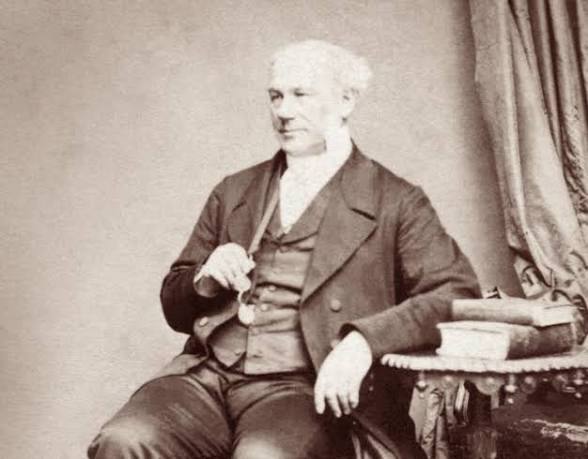
John Venn
A life devoted to Hereford
The story of the Hereford Society for Aiding the Industrious began with a determination to turn charity into practical action.
1802 — the beginningJohn Venn is born
A life that would become inseparable from the story of Hereford — and from a lasting vision of practical charity.
A new chapter in Hereford
John Venn became Vicar of St Peter’s and St Owen’s in Hereford, serving for 37 years. With his sister Emelia, he worked to influence social reform and to change the way poor and underprivileged people were cared for.
The Society’s account records that he was part of the nationally influential “Clapham Sect”, whose members included William Wilberforce and who helped to abolish the slave trade.
The Hereford Society
for Aiding the Industrious
A practical approach to charity.
John Venn founded the Society in 1841. The Society’s early philosophy centred on practical help — supporting people in ways that encouraged greater independence and self-reliance.
The flour mill
A practical response to hardship.
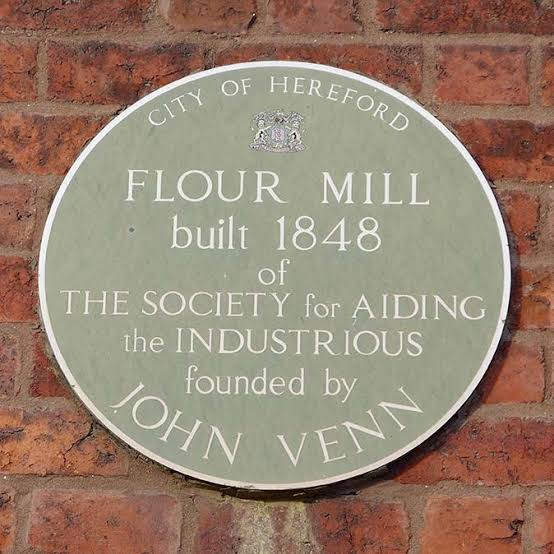
The City of Hereford plaque records the Society’s flour mill, built in 1848. Practical initiatives sought to improve economic security and independence.
Acts of practical help
John Venn’s wider social work and the Society’s activities included many forms of practical support. Not every initiative was directly operated by the Society.
Allotments form part of the wider history of John Venn’s practical social work in Hereford.
Soup kitchens and the Society’s flour mill belong to Hereford’s history of practical responses to hardship.
Education was among the themes of John Venn’s wider work with poorer people in the city.
Public baths are associated with the wider social reform connected with John Venn.
Accommodation remains central to the Society’s purpose today, through its 32 almshouses.
Community welfare runs through the broader history of Venn’s work and the Society’s continuing charitable purpose.
A wide circle of practical work
According to the Society’s own historical account, during Venn’s time the soup kitchen made soup for the poor, and schools, model houses and allotments were established.
A steam-powered flour mill also heated public baths and made handsome profits, which were ploughed back into other Society activities. A credit union and a coal store were set up, grants and loans were offered, and a new vicarage was built — though it was not used by Venn himself.
Venn Road
Homes, gardens and practical reform
The Society created a ten-house estate in the Venn Road / Kyrle Street area.
More than housing alone, the development brought together productive gardens and wider practical facilities intended to improve everyday living and self-sufficiency.
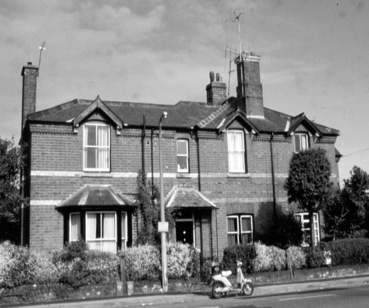
A closer look at Venn Road
Housing, productive gardens and practical support: a historic plan reflecting an ambition for greater self-sufficiency.
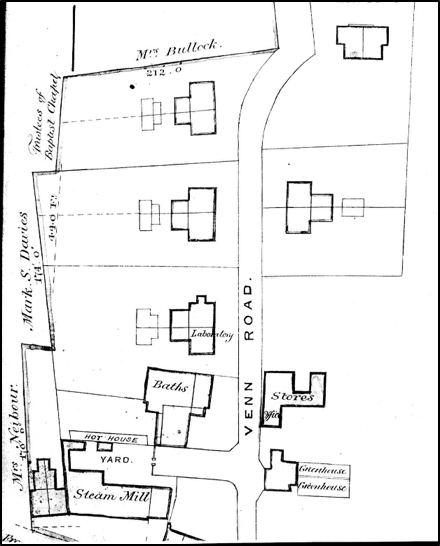
Cottages
Housing provided by the Society.
Housing provided by the Society.
Part of the wider practical / experimental work of the site.
A practical welfare facility.
Linked to the Society’s economic and self-help work.
Productive plots supporting food growing and self-sufficiency.
Part of the working infrastructure of the site.
The plan also labels the yard, hot house and Venn Road.
More than housing.
A model for better living.
The Venn Road development reflected a broader belief that practical support could improve health, independence and quality of life.
Union Passage
A purpose-built soup kitchen became one of the enduring physical reminders of nineteenth-century charitable work in Hereford.
View historic sourceA place in the city.
A lasting reminder.
From movement to institution
The Society became formally incorporated in 1884 — another chapter in the history of an organisation rooted in Hereford.
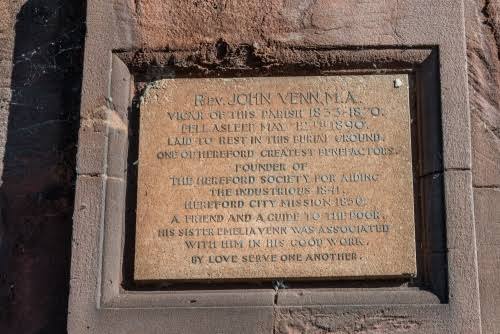
One of Hereford’s
greatest benefactors
Words preserved on the memorial plaque
the Hereford Society
for Aiding the Industrious1841
The memorial also records the association of his sister Emelia Venn with his work.
John Venn’s grave lies in St Peter’s Cemetery, between Commercial Road and Canal Road, where he is buried with his sister and their aunt. The stone arch into the graveyard is a Grade II listed building.
“By love serve
one another”
A message preserved in stone — and a principle that still resonates today.
The memorial plaque at Venn’s Arch, HerefordA legacy left to Hereford
John Venn’s life came to an end in 1890. His work left a lasting connection with Hereford. The Society’s continuing charitable purpose is part of that local legacy.
From practical reform
to a place to call home.
The homes and gardens of Venn Road expressed a belief in practical support. Today, that purpose continues through the Society’s 32 almshouses and other charitable assistance in Hereford.
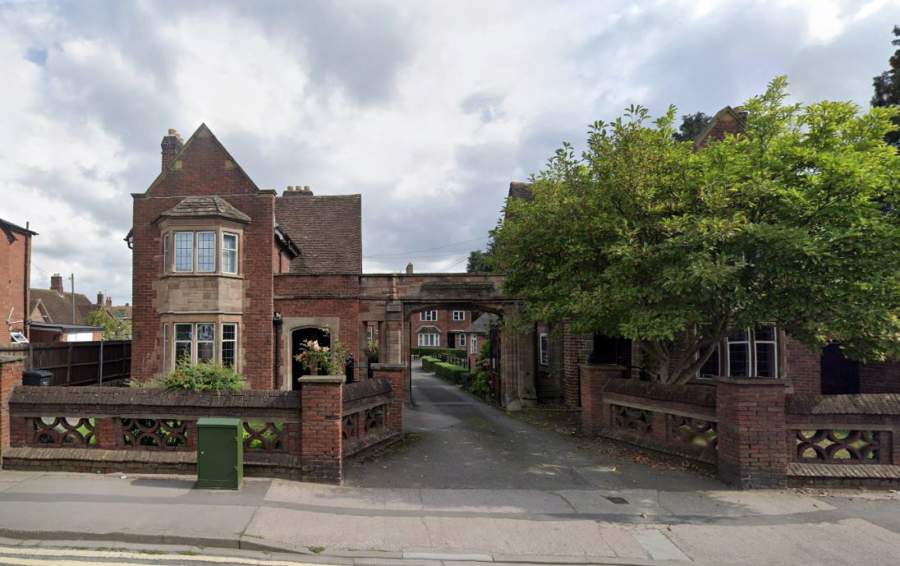
The work continues
More than 180 years after its foundation, the Hereford Society for Aiding the Industrious continues to support people in Hereford through almshouse accommodation and charitable assistance.
Sources & further reading
There is a permanent exhibition about the life and work of John Venn in St Peter’s Church, St Peter’s Square, Hereford.
Further reading: John Venn and the Friends of the Hereford Poor, Jean O’Donnell.